
Two homes can have the same number of bedrooms and very different budgets. Before looking for the lowest price, check that you are comparing the same building, the same finish level and the same scope of work.
A price per square metre is not the whole story.
A figure offered without drawings or a scope of work leaves many questions open. Does it include design studies, transport, labour, sanitary fittings and external works? Does it cover only the structure or a home ready for occupation? Clarify this before comparing prices.
In Lubumbashi, request quotations prepared for your plot, stating their date, currency and validity period. Clarify delivery, storage and site access conditions. An estimate does not become local merely because “Lubumbashi” appears in its heading.
Compare line by line, not just the total.

- The same drawing revision and the same measured areas.
- Clearly identified quantities, units and material specifications.
- Labour, transport and handling explicitly included or excluded.
- Finishes and equipment described clearly enough to avoid ambiguity.
- External works, drainage and connections listed separately where needed.
Building in stages still needs a complete plan.
If you want to start with part of the project, say so at the first design stage. Each phase needs a clear objective: which spaces will be usable, which services will work and how will unfinished areas be protected? “We will decide later” is not a design decision.
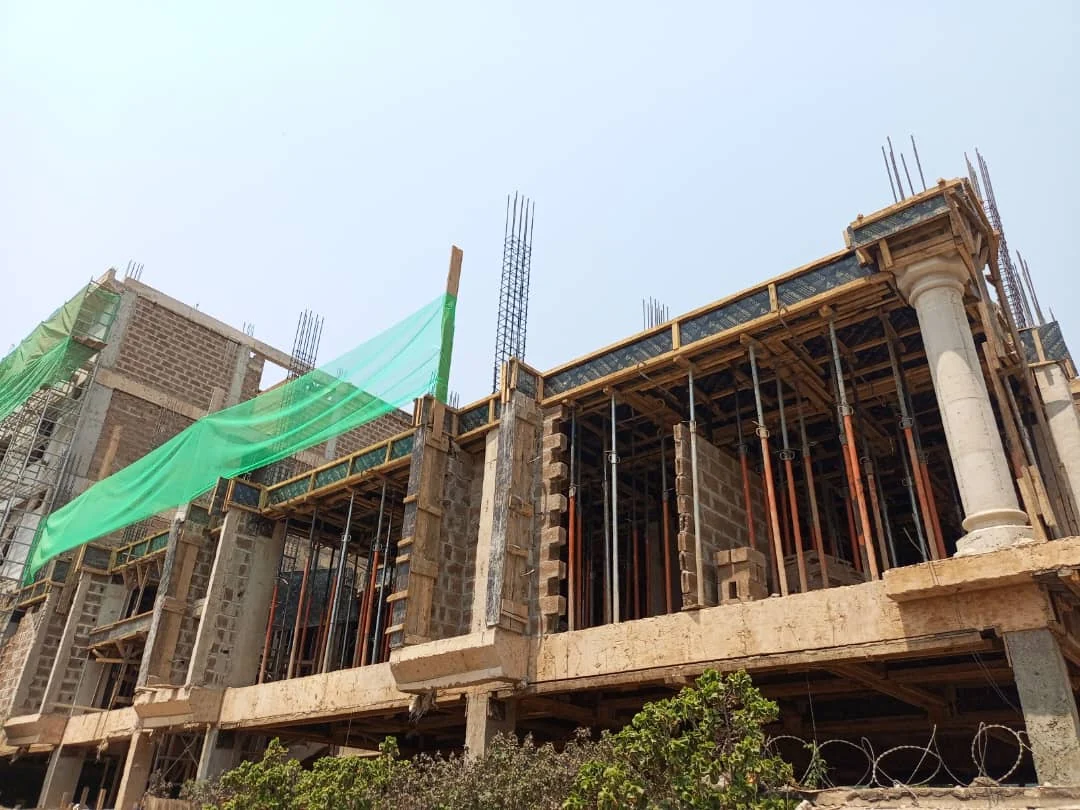
A possible future upper floor needs to be assessed from the outset by the design and structural team. Exposed starter bars alone do not demonstrate that an additional floor is possible. Ask for the design assumptions and conditions for resuming work to be recorded.

Decide on a change before having it built.
RICS highlights the importance of a clear project brief and a change-control process. For a homeowner, the practical application is straightforward: request a description of the change and its effect on cost and time, then record the decision.
Method: RICS, Why proper briefs are key to successful projects.

This also applies to an apparently small change: moving a bathroom, enlarging an opening or changing a finish. Keep a reference version of the drawings and quotation so everyone knows what was agreed. A contingency allowance should reflect project risks, not conceal missing work.
What to bring to the first meeting.
Gather the available site information, your priority needs, some finish references and your intended phases. State your budget and what it must cover. This creates a more useful conversation than exchanging a single price per square metre.